
Pioneer of the New Asian Gothic Horror Genre
This blog post traces Jayson R. Valencia’s journey from childhood writing alongside a lifelong friend to becoming a prolific horror author rooted in Asian memory, folklore, and lived fear. It reflects on long-term collaboration, creative risk, the use of pseudonyms, and the gradual formation of a distinct voice that would later define New Asian Gothic Horror. At its core, it is a narrative about persistence, shared history, and the decision to keep writing through every stage of change.
5/8/20242 min read
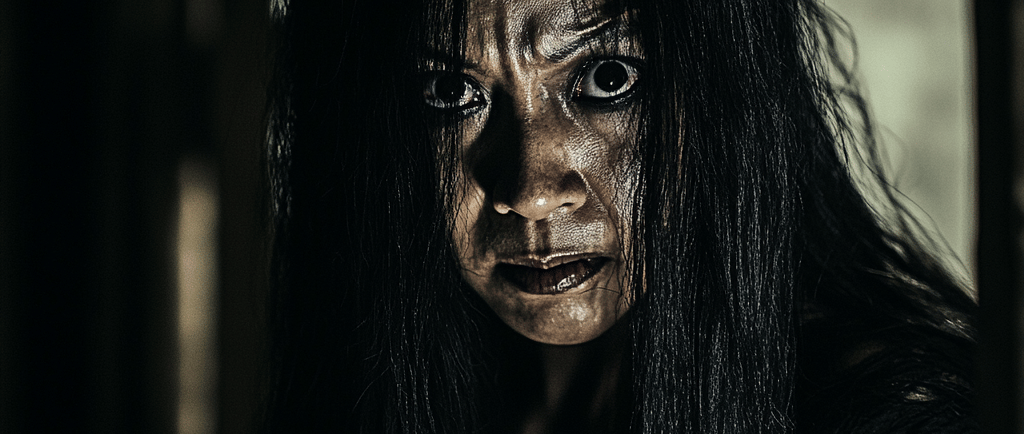
Jayson R. Valencia is a Filipino horror writer whose work has helped shape what readers now recognize as New Asian Gothic Horror. Rooted in lived memory, regional myth, and intimate terror, his stories reject imitation and spectacle in favor of atmosphere, moral unease, and culturally grounded dread.
Valencia’s writing life began early. Alongside his elementary school friend Rodulfo Q. Todio Jr., he started writing horror stories during their primary school years. What began as shared notebooks and after-school imaginings never stopped. The two continued writing through adolescence and adulthood, developing a narrative voice shaped by friendship, familiarity, and a deepening awareness of fear as a cultural and emotional force rather than a gimmick.
This long collaboration eventually found a modern outlet through a Fiverr writing gig titled “Write you a uniquely terrifying Asian horror story.” The project demanded originality at speed, but more importantly, it demanded cultural specificity. Each commission required stories that felt distinctly Asian without leaning on stereotypes. Over time, this body of work grew substantial enough to merit preservation.
From this period emerged a series of anthology collections published under Valencia’s name: Tales of Haunted Japan, Tales of Filipino Terror, Dark Tales of Asia, and Tales of Asian Horror. These books are not assembled at random. They represent a curated record of years of collaborative storytelling, refined through audience response and sharpened by repetition. The stories draw from folklore, urban memory, rural superstition, and psychological isolation, presenting Asia not as an aesthetic backdrop but as an active moral landscape.
A defining feature of Valencia’s work is the recurrence of characters modeled after real people from his youth. Names such as Harold Fadriquela, Boyet, Erwin Nicasio, Empoy, Rey Firmeza, and Randy Galvez appear across stories. These figures are not inserted as nostalgia. They function as emotional anchors, grounding supernatural events in authentic social dynamics formed during Valencia’s years at Camarin High School. Horror, in this context, arises from recognition as much as from fear.
After establishing himself through anthologies, Valencia turned toward experimentation. Seeking freedom from reader expectation and his own established voice, he explored novella-length and formally unconventional horror. Two works marked this shift. The Orchard That Eats Its Own was released under the pen name Li Mei Tan, while The First Carving appeared under the mononym Rodrigo. These names were chosen deliberately to separate experimental risk from brand familiarity. The narratives in these books are more internal, more abstract, and more willing to disturb through structure rather than plot.
Following this period, Valencia returned under his primary name with a series of standalone and interconnected novellas, including The Gate Has Teeth, Malipayon, The Siege at Fadriquela House, The Silence Between Bells, and Tadtad After the Clash. These works further refine his approach to horror as a slow confrontation rather than a sudden shock. Violence exists, but it is rarely the point. What lingers instead are consequences, memory, and the quiet spaces where belief and guilt intersect.
Valencia is currently in the early stages of developing what he refers to as the Valencia Horror Universe. This emerging framework aims to interlink locations, families, histories, and mythologies across his body of work, creating a cohesive yet flexible narrative cosmos. The intention is not franchise-building in a commercial sense, but continuity of emotional and thematic weight.
As a pioneer of New Asian Gothic Horror, Jayson R. Valencia’s contribution lies in his refusal to dilute cultural specificity for accessibility. His stories do not explain themselves. They invite the reader to stand inside unfamiliar silence and learn its rules. In doing so, he has carved out a space where Asian horror is neither derivative nor exoticized, but personal, unsettling, and enduring.